Scholarship
Erasmus Mundus Joint Masters Scholarships 2027–2028
Offered by European Union / Erasmus+
Location
Europe / Multiple Countries
Funding
Fully Funded
Study level
Master's
Field of study
All Fields
Application deadline
Not specified
About This Scholarship
DESCRIPTION:
Erasmus Mundus Joint Masters are international master's programmes jointly designed and delivered by a consortium of higher education institutions from different countries. The programmes are supported through the European Union's Erasmus+ programme and are intended to provide students with advanced academic training in an international and multidisciplinary environment.
Unlike a conventional master's programme delivered by one university, an Erasmus Mundus Joint Master is normally organised by a group of universities and other participating institutions. Students may therefore study at different universities and in different countries during the same degree programme, depending on the mobility structure established by the individual programme.
The programmes cover a wide range of academic and professional fields, including agriculture, environmental sciences, climate change, public health, engineering, data science, economics, development studies, food science, education, social sciences and many other areas.
Students from countries around the world can apply to eligible Erasmus Mundus Joint Masters, provided they meet the academic, language and other admission requirements of the programme they select. Some programmes offer Erasmus Mundus scholarships to selected applicants based on the programme's competitive selection process.
About the Programme:
-
Joint Master's Education: Students enrol in a master's programme jointly delivered by a consortium of universities and other eligible institutions. The participating institutions work together to develop the curriculum and provide academic training.
-
Study in Multiple Countries: Depending on the selected programme, students normally spend different parts of their studies at two or more participating institutions. The mobility arrangement differs from one programme to another.
-
International Curriculum: The curriculum combines the expertise and academic resources of the participating institutions. Students may therefore be exposed to different teaching approaches, research environments and academic perspectives.
-
Academic Mobility: Mobility is an important feature of many Erasmus Mundus programmes. Students may move between participating universities during the programme according to the approved study pathway.
-
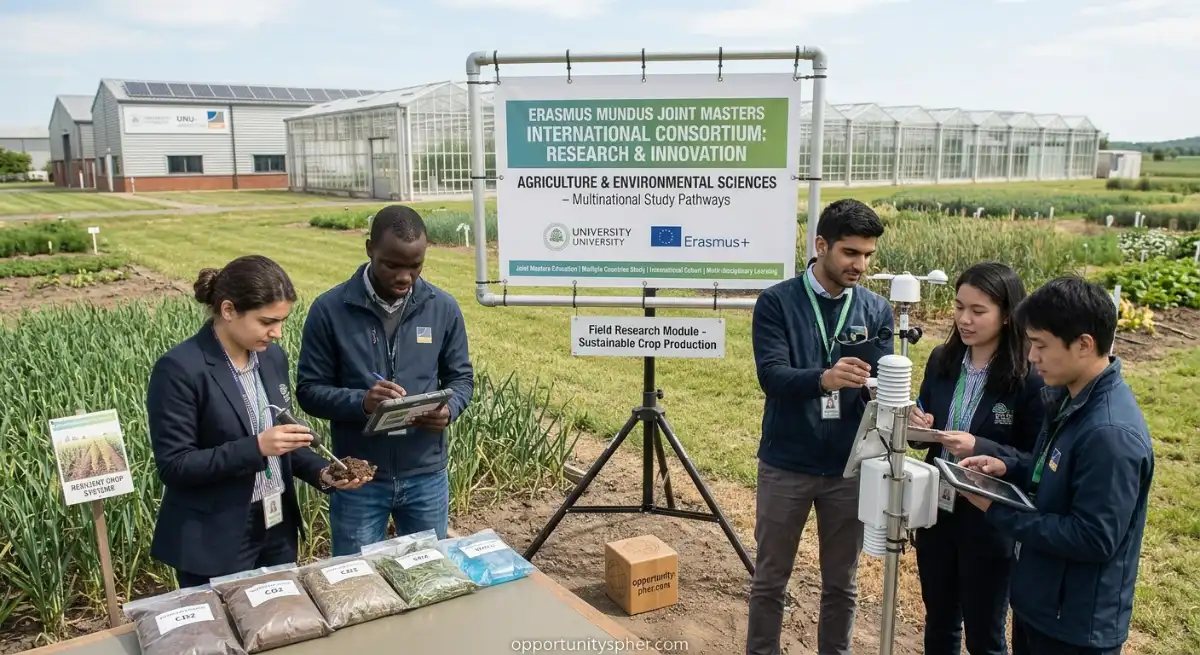
Research and Thesis: Depending on the programme, students may undertake research projects, laboratory work, fieldwork, internships or a master's thesis as part of their degree.
-
Multidisciplinary Learning: Some Erasmus Mundus programmes bring together several related academic disciplines, allowing students to develop knowledge beyond the boundaries of a single field.
-
International Cohort: Students study alongside participants from different countries and academic backgrounds, creating an internationally diverse learning environment.
Advertisement
Check the official website for the latest eligibility requirements, application instructions and deadlines.