Development Studies, Economics, Political Science, Finance & Accounting
Application deadline
November 20, 2026
About This Fellowship
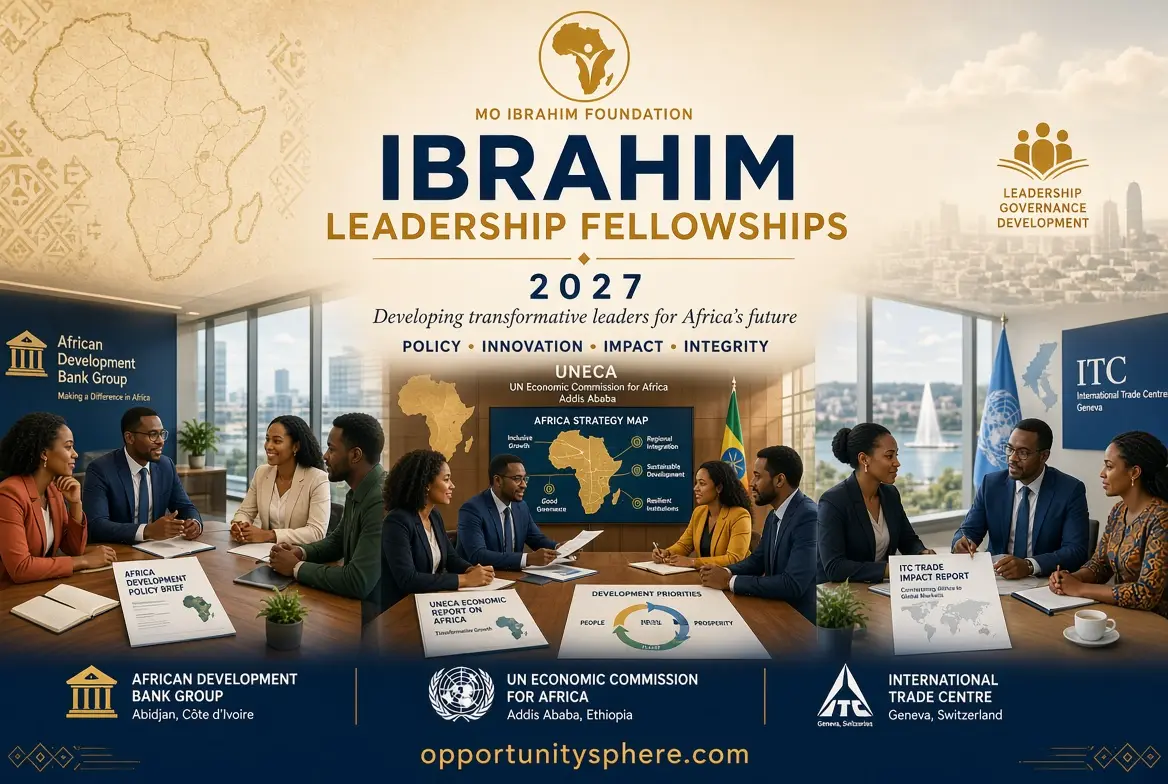
The Ibrahim Leadership Fellowships 2027, established by the Mo Ibrahim Foundation, offer exceptional young African professionals an opportunity to gain practical experience within some of Africa’s leading regional institutions and international organizations. The fellowship is designed to strengthen the next generation of African leaders by exposing participants to high-level institutional work, policy development, research, programme implementation and strategic decision-making.
The programme provides Fellows with the opportunity to work directly within the executive offices of three major institutions: the African Development Bank Group (AfDB) in Abidjan, Côte d’Ivoire; the United Nations Economic Commission for Africa (ECA) in Addis Ababa, Ethiopia; and the International Trade Centre (ITC) in Geneva, Switzerland.
Unlike an academic scholarship that primarily supports university study, the Ibrahim Leadership Fellowship is a professional leadership development programme. Fellows spend approximately 12 months working within their host institution and are exposed to the practical processes involved in developing policies, managing programmes, conducting research and supporting institutional decision-making.
The fellowship is intended to give talented African professionals a deeper understanding of how major African and international institutions operate and how policies and development programmes are designed and implemented. Through this experience, Fellows can develop professional networks, strengthen their technical capabilities and gain exposure to senior-level leadership.
The programme also forms part of the Mo Ibrahim Foundation’s broader efforts to encourage strong African leadership and contribute to improved governance and development across the continent.
1. Who Can Apply?
The Ibrahim Leadership Fellowships are intended for African professionals with substantial academic and professional experience who are interested in developing their leadership and institutional capabilities.
Applicants must generally:
Be nationals of an African country.
Hold a Master’s degree or equivalent postgraduate qualification.
Have at least seven years of relevant professional experience.
Be below the applicable age limit established by the programme.
Demonstrate professional experience and qualifications relevant to the work of the host institution.
Meet any additional eligibility requirements specified by the individual host organization.
The fellowship is particularly relevant to professionals who have already developed experience in areas such as public policy, economics, development, governance, international relations, finance, trade, research, public administration or other fields relevant to the work of the participating institutions.
Women applicants are also subject to a higher age threshold where the programme’s eligibility rules provide for this.
Because each host institution may have additional requirements, prospective applicants should carefully review the requirements associated with their preferred placement before submitting an application.
2. What Does the Fellowship Involve?
The Ibrahim Leadership Fellowship is a 12-month professional placement rather than a conventional classroom-based fellowship.
Selected Fellows work within the executive office of their assigned host institution and participate in the organization’s professional activities. Their responsibilities may involve research, policy analysis, programme support, strategic planning, preparation of briefing materials, institutional coordination and other assignments relevant to their host office.
The exact nature of a Fellow’s work depends on the institution and the needs of the executive office to which they are assigned.
This structure allows Fellows to move beyond theoretical knowledge and gain first-hand experience of how large regional and international organizations function.
During the fellowship, participants may be exposed to:
Policy development and analysis.
Institutional planning and strategy.
Research and preparation of technical materials.
Development and implementation of programmes.
International cooperation.
Regional development initiatives.
Economic and social policy.
Governance and institutional leadership.
High-level meetings and decision-making processes.
Professional communication and stakeholder engagement.
3. Fellowship Benefits
Successful Fellows receive a US$100,000 stipend for the 12-month fellowship programme.
In addition to the financial support, the fellowship provides a range of professional development opportunities.
These include:
A year of professional experience within a major regional or international institution.
Exposure to senior-level leadership and institutional decision-making.
Opportunities to contribute to real policy and development work.
Professional mentorship and guidance.
Access to an international network of development professionals.
Exposure to African and international policy environments.
Opportunities to strengthen research, analytical and communication skills.
Experience working in a multicultural and international professional environment.
Membership of the Mo Ibrahim Foundation’s professional network after the fellowship.
The experience gained during the programme can be particularly valuable for professionals intending to pursue careers in international development, public policy, diplomacy, economic development, governance, international organizations, research institutions or senior public-sector roles.
4. Host Institutions
The 2027 Ibrahim Leadership Fellowships provide placements within three major institutions.
4.1 African Development Bank Group (AfDB) – Abidjan, Côte d’Ivoire
The African Development Bank Group is a major African multilateral development institution focused on supporting economic and social development across the continent.
A Fellow placed at the AfDB may gain exposure to areas related to economic development, infrastructure, finance, regional integration, public policy, development programmes and other institutional priorities.
The placement provides an opportunity to understand how a major African development bank develops and supports initiatives intended to address economic and development challenges across African countries.
4.2 United Nations Economic Commission for Africa (ECA) – Addis Ababa, Ethiopia
The United Nations Economic Commission for Africa works on economic and social development issues affecting African countries.
A Fellow at ECA can gain exposure to research, economic policy, development strategy, regional integration and other areas connected to the organization’s mandate.
Working within this environment can provide valuable insight into how evidence and research are incorporated into regional development discussions and policy processes.
4.3 International Trade Centre (ITC) – Geneva, Switzerland
The International Trade Centre is a joint agency of the United Nations and the World Trade Organization that focuses on supporting businesses and countries to participate more effectively in international trade.
A Fellow at ITC may gain experience in areas connected to trade, economic development, international markets, private-sector development and trade-related policy.
The Geneva placement also provides exposure to a broader international policy environment and to institutions involved in global economic cooperation.
5. Professional and Leadership Development
A major component of the Ibrahim Leadership Fellowship is professional development.
Fellows work alongside experienced professionals and senior institutional leaders, allowing them to observe how complex policy and development decisions are approached in major organizations.
Throughout the fellowship, participants can develop skills in:
Policy analysis.
Research.
Strategic thinking.
Project and programme management.
Professional writing.
Communication.
Stakeholder engagement.
Leadership.
Institutional coordination.
Problem-solving.
International collaboration.
The experience can also help Fellows develop a clearer understanding of the relationship between policy, governance and development outcomes.
6. Networking Opportunities
The fellowship provides participants with opportunities to build professional relationships with colleagues, policymakers, researchers and development professionals.
Because Fellows are placed in internationally connected institutions, participants can interact with professionals from different African countries and other parts of the world.
These relationships can become an important part of the Fellow’s professional network and may provide opportunities for future collaboration, research, employment and leadership initiatives.
After completing the fellowship, participants become members of the Mo Ibrahim Foundation’s Now Generation Network (NGN).
The network connects young African professionals and provides a broader platform for continued engagement with issues affecting African leadership, governance and development.
7. Who Is This Fellowship Suitable For?
The Ibrahim Leadership Fellowship may be particularly relevant to African professionals who have already established themselves in their careers and want to gain experience within a major regional or international institution.
Potential applicants may include professionals working in areas such as:
Government and public administration.
International development.
Economics and finance.
Public policy.
International relations.
Governance.
Research.
Trade.
Regional integration.
Development planning.
International organizations.
Civil society and development programmes.
Applicants should be able to demonstrate how their previous academic and professional experience relates to the work of the institution and the fellowship.
8. Application Requirements
Applicants should carefully prepare their application materials before beginning the submission process.
Depending on the requirements of the relevant host institution, applicants may be required to provide information relating to:
Academic qualifications.
Professional experience.
Current and previous employment.
Relevant leadership experience.
Professional achievements.
Motivation for applying.
Areas of professional interest.
References or supporting documentation.
Applicants should also clearly demonstrate how their professional background can contribute to the work of their preferred host institution.
Because the three host institutions operate in different areas, applicants should ensure that their experience and career objectives are relevant to the institution and fellowship placement they are applying for.
9. Fellowship Duration
The Ibrahim Leadership Fellowship lasts for approximately 12 months.
During this period, Fellows are expected to actively participate in the work of their host institution and undertake responsibilities assigned within their placement.
The programme therefore requires a significant professional commitment and is intended for applicants who are prepared to dedicate the fellowship period to their host organization.
10. Career Development After the Fellowship
The fellowship is intended to provide more than short-term professional experience.
By working directly within major regional and international institutions, Fellows can develop a stronger understanding of international development, institutional leadership and policy processes.
The experience may support future careers in:
International organizations.
Government institutions.
Development agencies.
Research organizations.
Multilateral institutions.
Public policy.
International finance.
Trade and economic development.
Governance and leadership.
Academia and research.
After completing the programme, Fellows remain connected to the Mo Ibrahim Foundation through its Now Generation Network, providing an avenue for continued professional engagement with other emerging African leaders.
11. Application Information
Applications for the 2027 Ibrahim Leadership Fellowships are open to eligible African professionals.
Prospective applicants should carefully examine the official requirements before applying because the participating host institutions may have additional criteria relating to qualifications, professional experience and the nature of the proposed placement.
Applicants should also ensure that all required documents and information are submitted through the designated application process before the closing date.
Application deadline: 20 November 2026.
The fellowship provides an opportunity for experienced African professionals to gain first-hand exposure to the work of major regional and international institutions while developing the professional and leadership capabilities needed to contribute to Africa’s development.
Related Opportunities
Explore other scholarships, fellowships, grants, research opportunities and more that may match your interests.